Traditional Stone Houses
Traditional stone houses have become increasingly interesting and attractive for living or renting. Restoring old Dalmatian stone houses is a difficult, lengthy, and quite expensive task. The reconstruction of such properties yields magnificent results when owners do not "invent" tradition, use natural materials that were previously used, and adapt traditional buildings to the existing space.
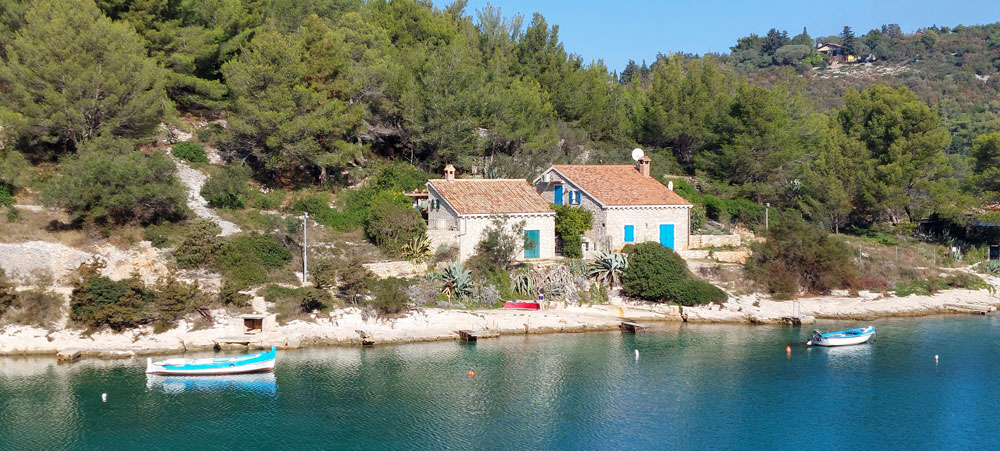
Today, stone houses are considered cultural heritage; they are a testament to the ways our ancestors met their daily needs and created a sense of home. In today's globalized world, the uniqueness of each area is becoming more precious. Therefore, we strive to preserve and nurture cultural heritage because a lost identity means a lost sense of home.


Characteristics of Old Stone Houses on the Adriatic
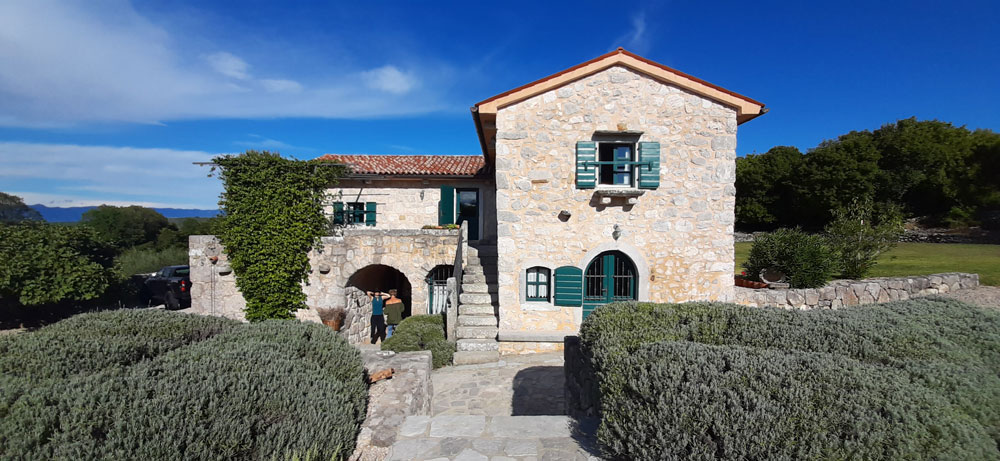
The primary link in construction is groups of houses belonging to one family (surname). In Dalmatia, they are called "dvori," and in Istria, "korte." Initially, small or communal homes were built to meet basic functions – residential and agricultural (e.g., barns, mills – watermills). Cramped, single-room houses gradually began to expand. The ground floor of such two-story houses was used as a cellar in wine-growing areas, and as stables in livestock areas, while the upper floor was used for sleeping. The upper floor was typically accessed by external stone stairs. Over time, rooms began to connect through internal wooden staircases.
The main room remains the kitchen, always located on the ground floor. Hearths (komini) as the family's gathering center were initially in the middle of the room (kitchen). Over time, as the house became multi-roomed, the hearth moved to one of the walls. In northern areas, the hearth is at floor level, while further south, it is raised 10 to 20 centimeters. In Konavle, hearths were up to 60 cm high, at "working" height to ease the housewife's work. The work surface of the hearth was made of compacted clay and later of solid brick (matun). Less commonly, they were metal plates on a bed of crushed quartz stone.
Windows in traditional construction were small, primarily due to the cost of glass. However, people then performed daily tasks outdoors. Small windows protected them from the sun, rain, and storms. Before the use of glass, windows were small openings with single shutters (škura) that opened inward. It wasn't until the late 19th or early 20th century that windows became larger, always rectangular and upright, single or double-leaf. Alongside such windows, shutters with horizontal slats were installed.
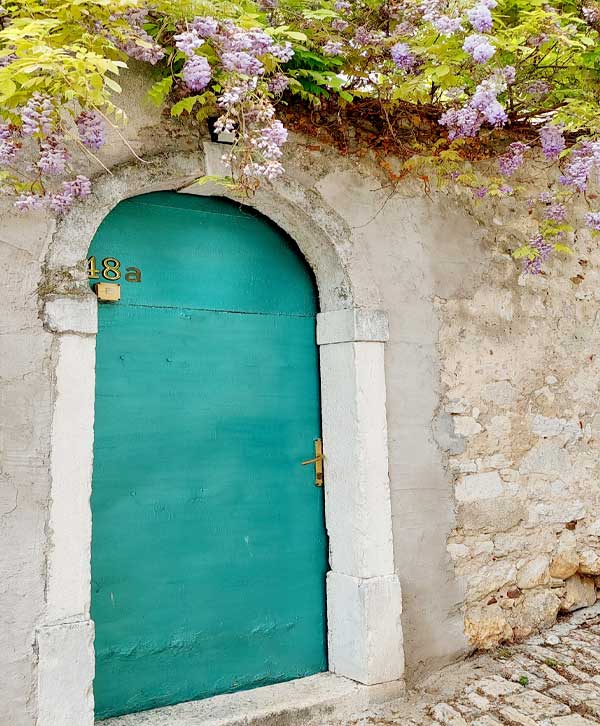
Similarly, horizontal slats, typically 20 – 25 cm wide, were placed on exterior doors. They were secured with wooden bolts (kračuni). Both doors and windows were usually painted green, and occasionally gray. Blue openings are more characteristic of southern Mediterranean countries.
The most striking elements of stone houses are balusters, arches, and solars... Their primary function is connecting the ground floor with the upper floor. They were generally built on the southern side of the house to protect the cellar doors from overheating. In winter, women would sit and do their usual tasks (spinning yarn, knitting…). In front of the upper floor doors, there were usually stone benches for resting, often offering a view of the field. An additional quality of such houses was a covered terrace.
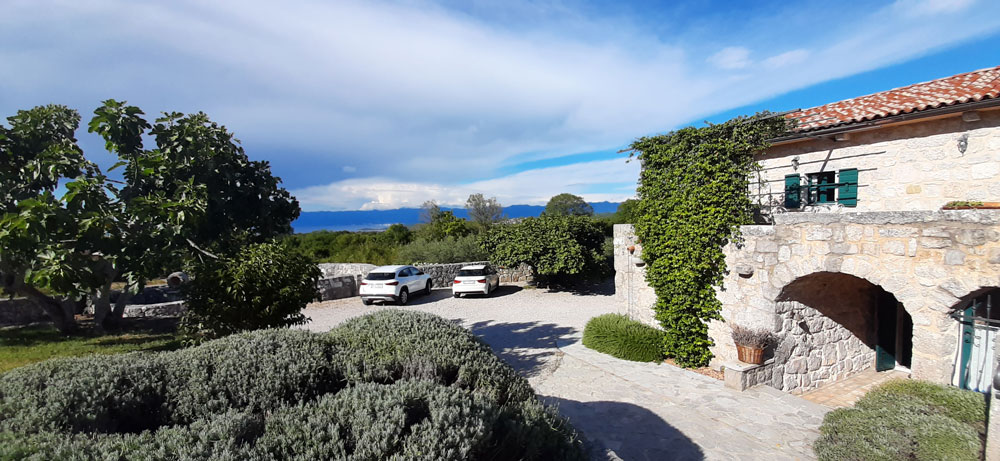
The ambiance of stone walls, stone floors, stone benches, with the characteristic smell of stone on summer evenings. Courtyards where shade is mostly provided by hackberries, mulberries, vines… This inspiration is an inexhaustible source for interior design.